How to Notarize a Document, and What Notarization Actually Proves
The steps, the cost, and the part most people get wrong: a notary certifies who signed, not that the document is true, fair, or enforceable.
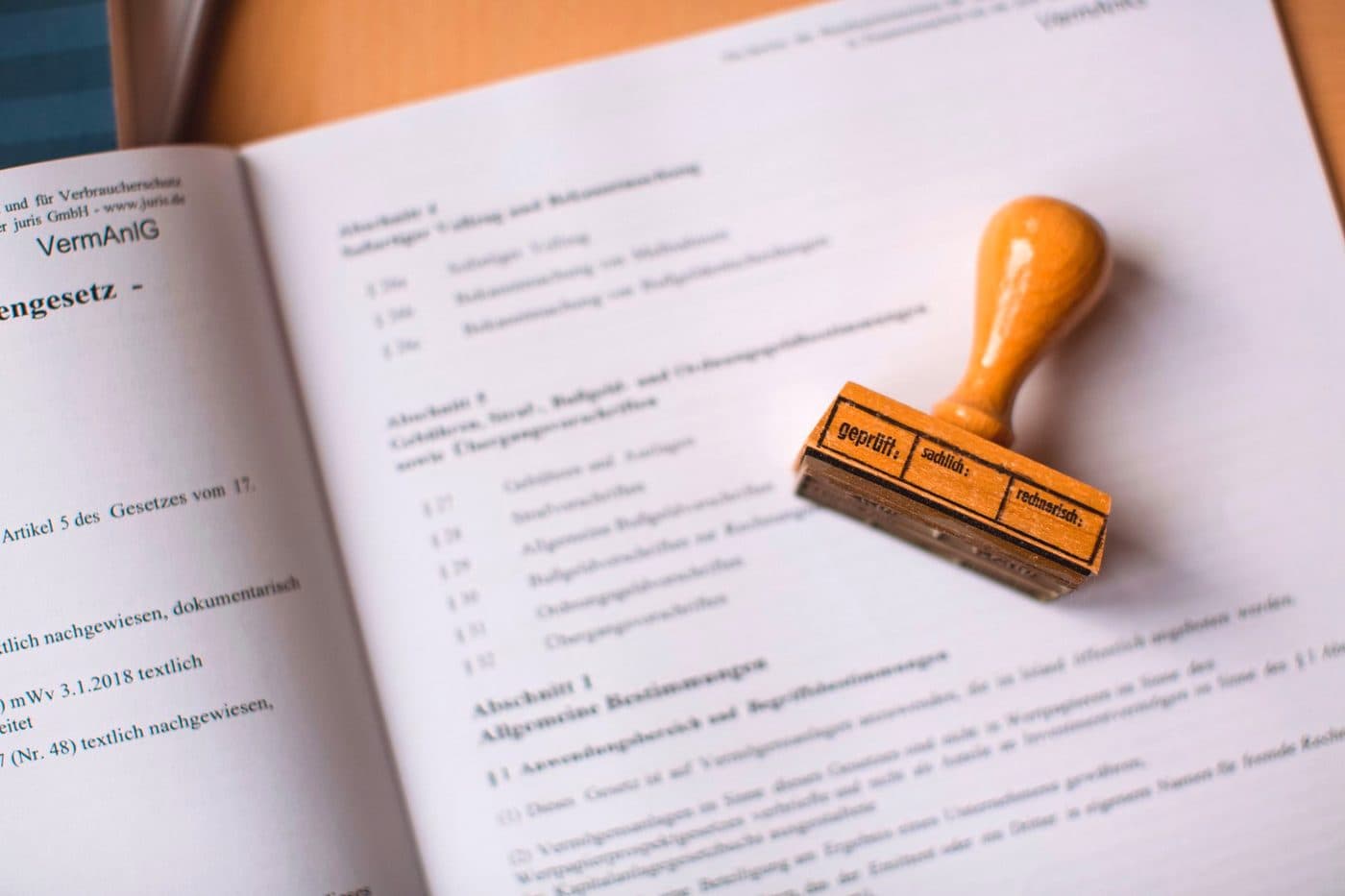
To notarize a document you appear before a commissioned notary, prove your identity with acceptable ID, sign in front of them, and the notary completes a certificate and applies their seal. It can be done in person or, in most states, over live audio and video. Expect roughly $5 to $25 per signature in person, set by state law, and more for a remote session.
The step people skip is understanding what they just bought. A notary certifies who signed and that they signed. Nothing about whether the document is accurate, fair, complete, or enforceable.
What a notarial act legally is
Under the Revised Uniform Law on Notarial Acts, the model statute most states have adopted, an acknowledgment is defined as:
"a declaration by an individual before a notarial officer that the individual has signed a record for the purpose stated in the record"
And the officer's duty on taking that acknowledgment is specific:
"A notarial officer who takes an acknowledgment of a record shall determine, from personal knowledge or satisfactory evidence of the identity of the individual, that the individual appearing before the officer and making the acknowledgment has the identity claimed and that the signature on the record is the signature of the individual."
Read the list of duties there: identity, and that the signature belongs to that person. Assessing whether the contents are true is not among them. A notary can seal a document full of false statements and have performed their job correctly, because the job was never to read it for accuracy.
The statute does give the officer grounds to refuse. Under the same law they may decline if not satisfied that the signer "is competent or has the capacity to execute the record" or that the signature "is knowingly and voluntarily made." Capacity and willingness, not correctness.
The steps
- Do not sign it yet. Signing beforehand defeats the point for an acknowledgment, and many notaries will refuse.
- Bring acceptable identification. A current government-issued photo ID is the usual standard.
- Appear before the notary, in person or over audio and video where your state permits it.
- Sign in their presence, or acknowledge to them that the signature is yours.
- The notary completes the certificate, records the act in their journal where required, and applies the seal.

Identity is the notary's actual job. A current government photo ID is the usual standard for satisfying it. Photo: Ekaterina Belinskaya via Pexels. Pexels License.
What it costs
Fees are capped by state statute, commonly in the $5 to $25 range per notarial act for an in-person signature. Remote online notarization usually costs more, because a platform sits in the middle and the session has to be recorded and stored.

Fees are capped by state statute, commonly $5 to $25 per act for an in-person signature. Photo: Anna Tarazevich via Pexels. Pexels License.
Where you find one: banks and credit unions often notarize for account holders at no charge, as do many shipping stores, law offices, and public libraries. Mobile notaries travel to you and charge a travel fee on top of the statutory cap.
Remote notarization
Most states now authorize notarization over live audio and video, but the requirements differ enough that the only reliable answer is your own Secretary of State. Some common features of the statutes:
- The certificate must state that the act was performed using audio-video communication technology
- An audio-video recording of the session is created and retained, with the signer's explicit consent to the recording and its storage
- Certain records are carved out. Colorado's version, for instance, forbids remote notarization of records relating to the electoral process, and of wills and codicils except under its Uniform Electronic Wills Act
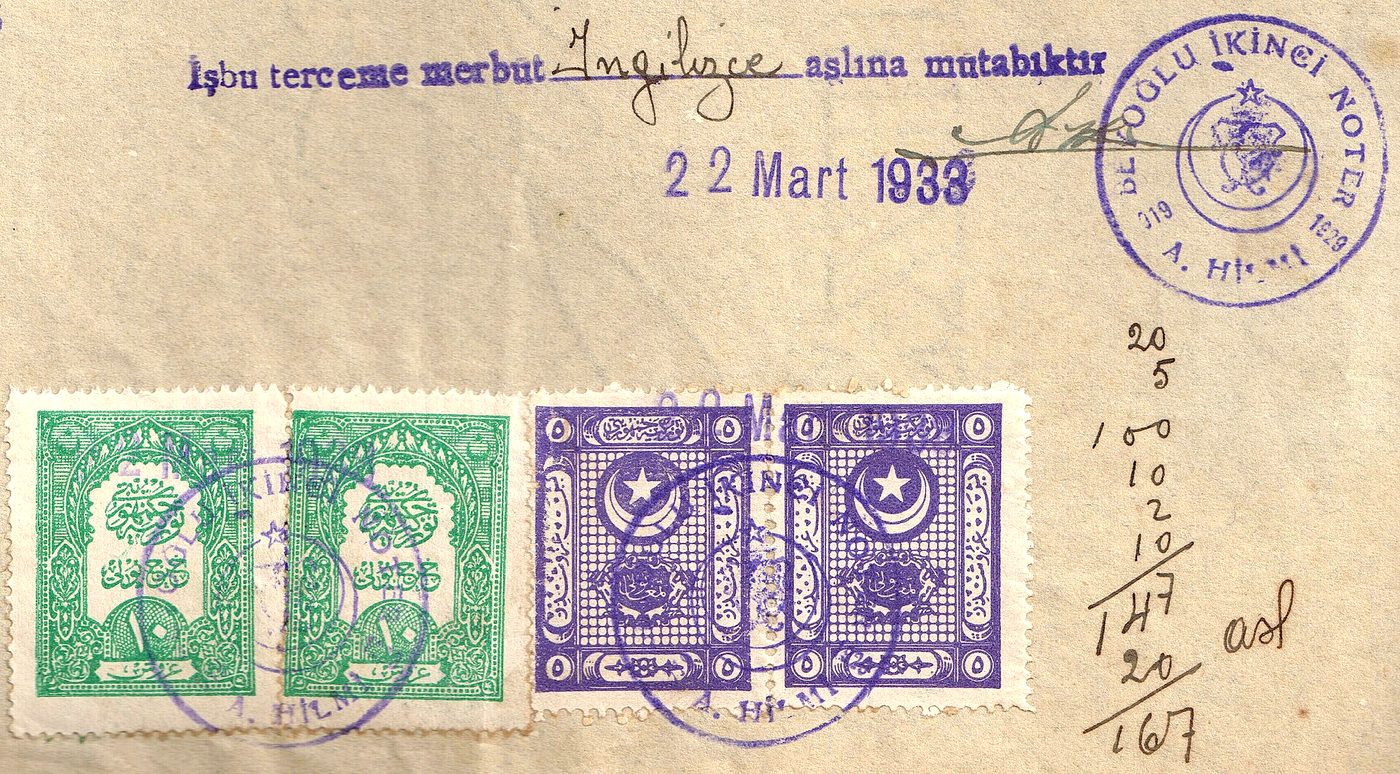
A notarial certificate from 1933. The form has changed and the substance has not: an officer attesting who appeared and signed. Photo: Government of Turkey via Wikimedia Commons. Public domain.
.jpg)
What notarization does not do
This is where the expectation gap lives.
| People assume | Actually |
|---|---|
| The notary checked the document | They checked your ID and watched you sign |
| Notarizing makes it legally binding | Enforceability comes from the agreement's own terms and the law that governs it |
| Notarizing proves the contents are true | A sworn statement puts the signer at risk of perjury; the notary still vouches for nothing in it |
| It proves the other side received it | It says nothing at all about delivery or receipt |
That last row is the one that sends people looking for something else.
When a notary is not the tool
A notarial act is the right instrument when a statute or a counterparty demands one: deeds, powers of attorney, affidavits, many vehicle title transfers. If a form has a notary block, get it notarized.

An embosser marks a document. It says nothing about whether anyone on the other end received it. Photo: mockupbee via Pexels. Pexels License.
It is the wrong instrument when the thing you actually need to prove is any of these:
- That you delivered something, and what was in it
- That the other side received and reviewed it, on a date you can name
- That the contents have not changed since you sent them
- That a warning was given before the work started
None of those are notarial acts. A notary was never in the room when you handed the files over, and no seal on your copy says anything about the other party.
That is the job Pactbound does: it seals the content, records an identity-checked acknowledgment from the person on the other end, and timestamps both against a public ledger so neither side sets the clock. It is documentation, not a notarial act, and it does not replace one where a statute calls for a notary. The two answer different questions. What that evidence proves, and what it does not is the honest version of the second one.
Sources
- Revised Uniform Law on Notarial Acts, as enacted in Colorado, sections 24-21-502 (definitions), 24-21-505 (identity determination), 24-21-508 (authority to refuse), and the remote notarization provisions
- Uniform Law Commission, which drafts and maintains RULONA
Fee ranges and provider availability are general and vary by state. Your Secretary of State publishes the current statutory cap and the rules that apply where you are.